
Introduction
For many Nigerian freelancers and remote workers, understanding the fluctuations in currency exchange is a daily necessity. As the digital economy grows, individuals earning in foreign currencies often find themselves navigating a complex landscape of different conversion values. The Upwork to Naira black market rate, alongside the official rates provided by the Central Bank of Nigeria (CBN), forms the backbone of how international earnings are valued locally.
The volatility of the Naira against the US Dollar (USD) is driven by various macroeconomic factors, including inflation, heavy reliance on imports, and international travel requirements. For anyone earning in USD or paying for services in foreign currency, staying informed is the first step toward financial awareness.
This article is written to help readers understand currency exchange concepts in Nigeria. It is intended for informational purposes only and does not constitute financial or investment advice. Exchange rates are subject to change based on market conditions and specific platform policies.
Table of Contents
5. What Is the Dollar to Naira Exchange Rate?
The exchange rate is simply the price of one currency in terms of another. In Nigeria, the most significant pair is the US Dollar (USD) and the Nigerian Naira (NGN).
When we talk about the USD to NGN rate, we are looking at how many Naira units are required to purchase one US Dollar. This value is not static; it fluctuates based on the global demand for the Naira versus the demand for the Dollar. Because the US Dollar is a global reserve currency used for international trade, its value significantly influences the purchasing power of Nigerians who rely on imported goods or digital services.
6. Official Dollar to Naira Rate in Nigeria
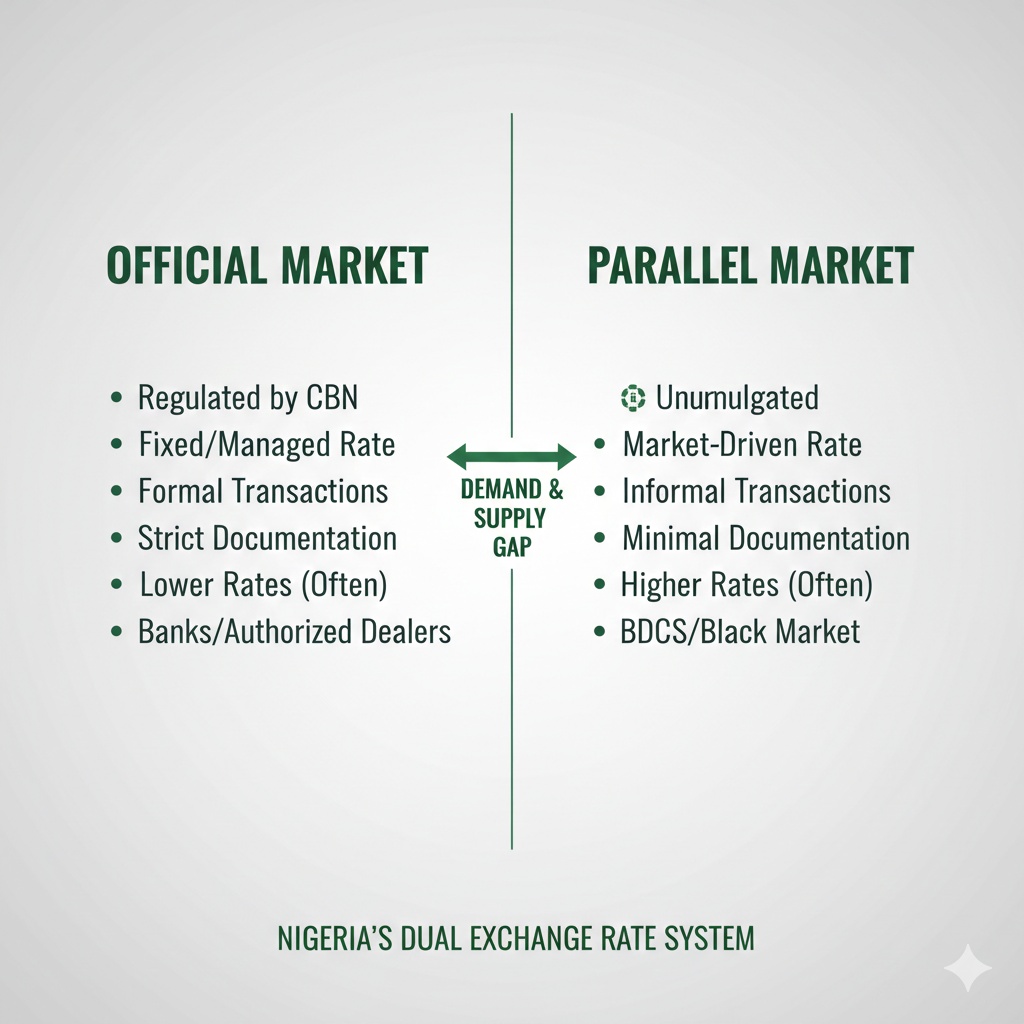
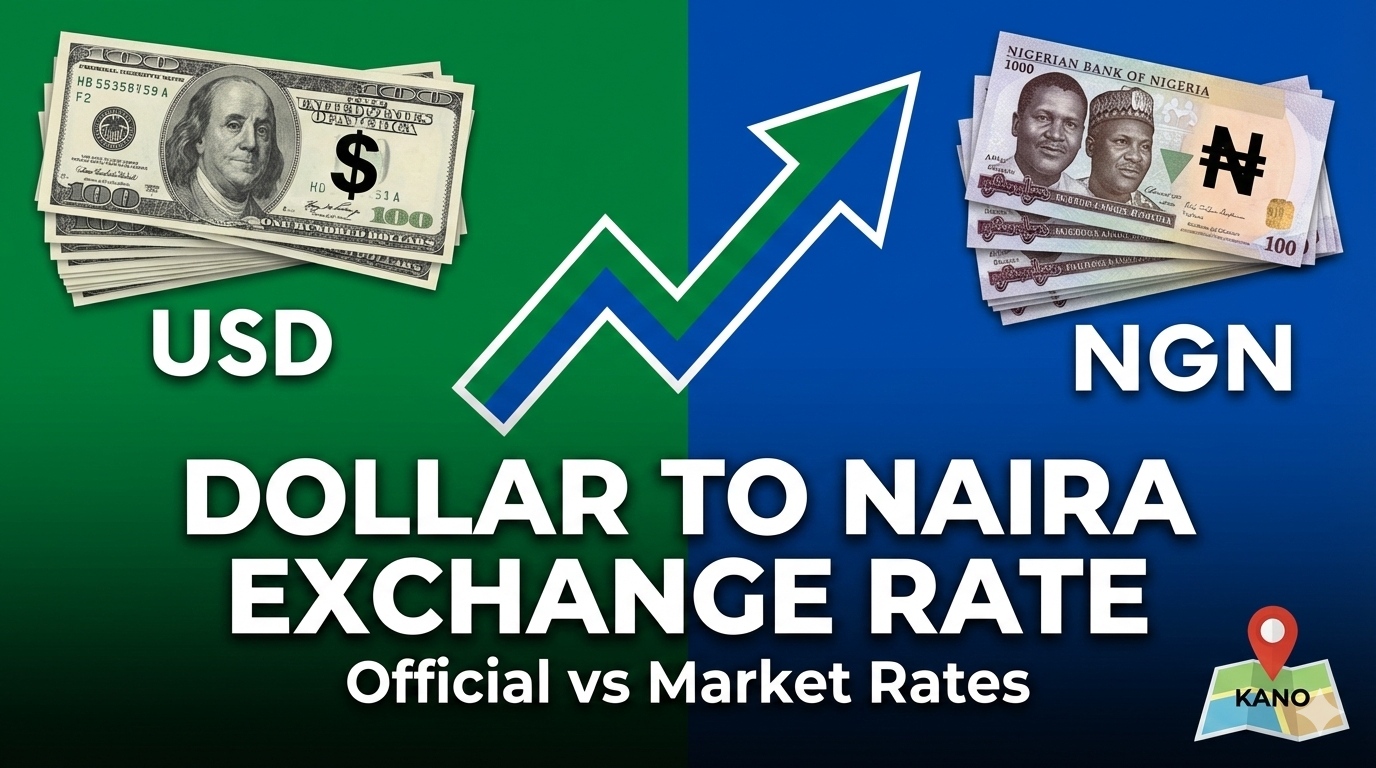
The “official rate” refers to the exchange value determined and overseen by the Central Bank of Nigeria (CBN). This rate is typically used for government-to-government transactions, debt servicing, and authorized petroleum imports.
The Role of the Central Bank of Nigeria (CBN)
The CBN manages the official rate to maintain monetary stability. By intervening in the foreign exchange market, the bank attempts to ensure that essential sectors of the economy have access to foreign currency at a controlled price.
Why Official Rates Exist
Official rates are designed to provide a transparent benchmark for the economy. They serve as a guide for commercial banks and authorized dealers. While the official rate is often lower than the market rate, access to it is usually restricted to specific, documented purposes such as:
- Form A applications for school fees and medical bills.
- Form M for industrial imports.
- Personal and Business Travel Allowances (PTA/BTA).
7. Parallel / Market Rates Explained
The parallel market, often referred to as the “black market,” exists outside the formal banking system. This market operates based on the immediate laws of supply and demand.
Understanding the Difference
Unlike the official window, which may have administrative delays or strict documentation requirements, the parallel market offers immediate liquidity. However, this convenience comes at a higher cost. The gap between the official rate and the parallel rate is known as the “premium” or “spread.”
Legal and Risk Awareness
It is important to note that the parallel market is not regulated by the CBN. Engaging in informal currency exchange carries inherent risks, including the lack of a paper trail and exposure to unverified sources. Most financial experts recommend using official banking channels whenever possible to ensure compliance with Nigerian financial regulations.
8. Why the Dollar Is Expensive in Nigeria
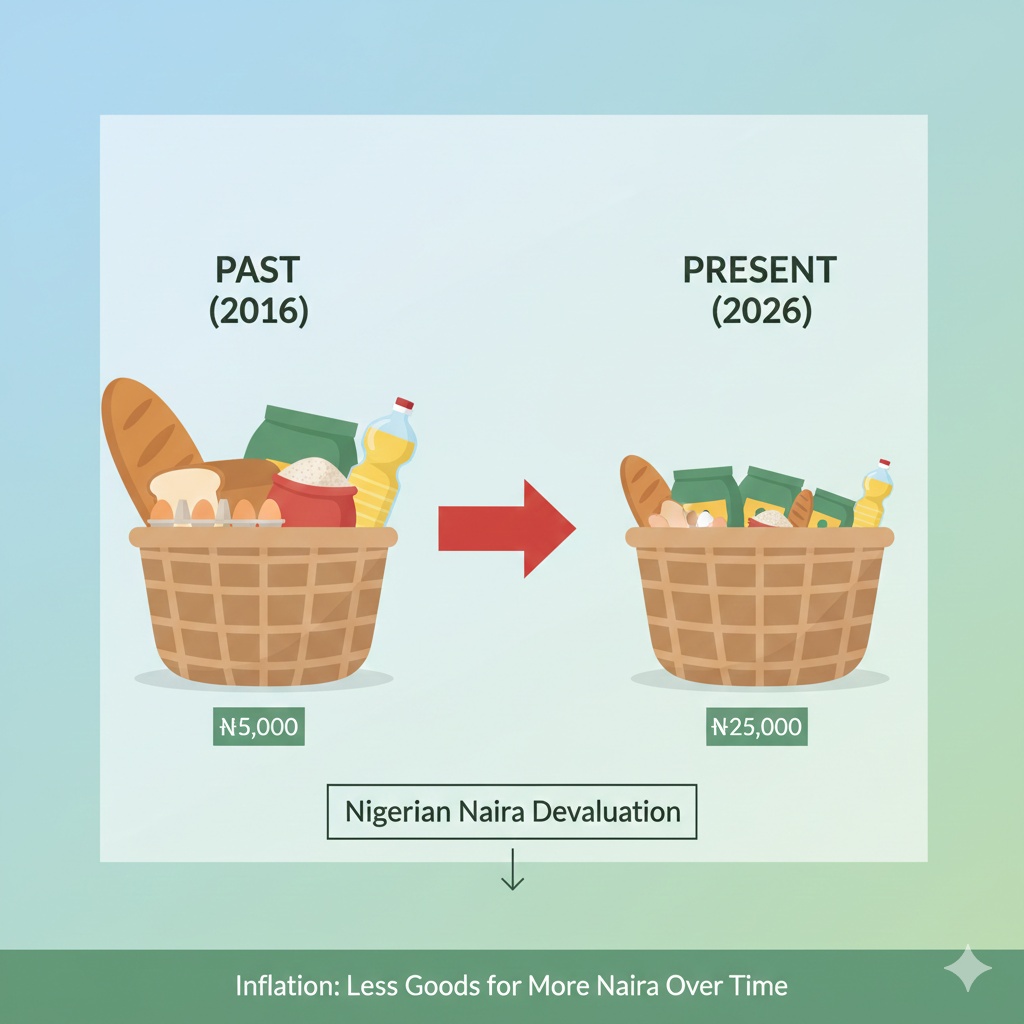
Several economic factors contribute to the high cost of the US Dollar against the Naira. Understanding these helps clarify why the Upwork to Naira black market rate remains a topic of high interest.
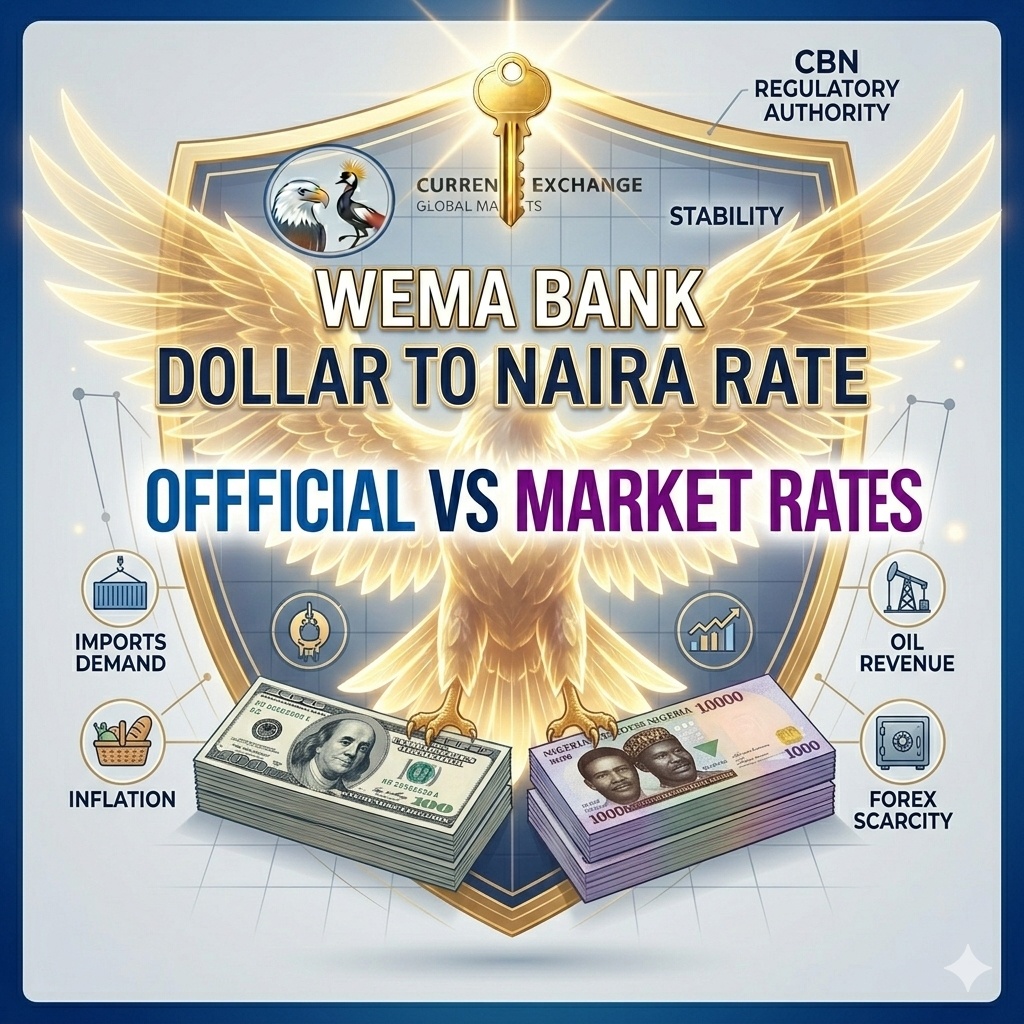
Import Dependency
Nigeria relies heavily on imported goods, ranging from refined petroleum to electronics and machinery. To buy these goods, Nigerian businesses must convert Naira to Dollars, creating a high and constant demand for USD.
Oil Revenue Fluctuations
As an oil-exporting nation, a large portion of Nigeria’s foreign exchange earnings comes from crude oil. When global oil prices drop or production levels fall, the supply of Dollars into the Nigerian economy decreases, leading to a scarcity that drives up the price.
Inflation
High inflation reduces the purchasing power of the Naira. As prices for local goods rise, the currency loses value relative to more stable foreign currencies like the US Dollar.
9. How Exchange Rates Affect Daily Life in Nigeria
The exchange rate is not just a number on a screen; it has a direct impact on the cost of living for every Nigerian citizen.
- Food Prices: Many agricultural inputs, such as fertilizers and machinery, are imported. When the Dollar becomes more expensive, the cost of producing food locally increases.
- Fuel and Energy: While Nigeria produces crude oil, the cost of refining and transporting fuel is often tied to international Dollar rates.
- Online Subscriptions: Freelancers and professionals paying for software, hosting, or educational tools on platforms like Upwork or Coursera see their costs rise as the Naira weakens.
- Travel and Education: For those with children studying abroad or those traveling for business, a higher exchange rate significantly increases the Naira equivalent of tuition and flight tickets.
10. Common Myths About Dollar to Naira Exchange
Misinformation can lead to poor financial decisions. Here are three common myths debunked:
Myth 1: “The Dollar will crash tomorrow.” Currency values are tied to deep economic structures. While fluctuations happen, a sudden “crash” or return to old rates is unlikely without massive structural changes in the national economy, such as a significant increase in non-oil exports.
Myth 2: “The rate is the same everywhere.” Different platforms and banks may offer slightly different rates based on their liquidity and transaction fees. The rate you see on a global news site may not be the rate available at a local commercial bank.
Myth 3: “Exchange rates are fixed.” Since the move toward a more flexible exchange rate system, the value of the Naira is determined more by market forces than by government decree. It changes daily based on trading volume.
11. How to Check Dollar to Naira Rates Safely
To avoid scams or inaccurate information, always use verified sources to monitor exchange trends.
- Commercial Banks: Most Nigerian banks display their current exchange rates for PTA, BTA, and web transactions on their apps or websites.
- Official CBN Website: For the most accurate “official” rate, the Central Bank of Nigeria’s portal is the primary authority.
- Reputable Financial News Outlets: Established business news platforms provide daily updates on market trends.
- Authorized Fintech Apps: Many licensed digital banks provide real-time conversion calculators for their users.

12. FAQ Section
What is the official dollar to naira rate? The official rate is the value set by the Central Bank of Nigeria for authorized transactions. It is the rate used by commercial banks for documented foreign exchange needs.
Why is the dollar higher in Nigeria than in previous years? The increase is primarily due to a high demand for imports, reduced foreign exchange earnings from oil, and inflationary pressures within the domestic economy.
Is the black market rate legal? The CBN encourages all citizens to use official banking channels for foreign exchange. Transactions in the parallel market lack the regulatory protections offered by the formal financial system.
Does the dollar rate change daily? Yes. In a floating or managed-float exchange system, market forces of supply and demand cause the rate to fluctuate every business day.
How does the Upwork rate differ from the bank rate? Upwork often uses third-party payment processors or its own conversion system. These rates may include service fees or be based on specific mid-market rates that differ from what a Nigerian bank might offer.
Where can I check trusted rates? Trusted rates can be found on the Central Bank of Nigeria website, through official commercial bank communications, and on reputable financial education blogs like dollarnaija.com.ng.
13. Conclusion
Navigating the world of foreign exchange in Nigeria requires patience and consistent education. Whether you are tracking the Upwork to Naira black market rate for freelance earnings or simply trying to understand why the cost of goods is rising, awareness is your best tool. By relying on official sources and understanding the economic drivers behind these numbers, you can better manage your financial expectations.
The Nigerian economy continues to evolve, and with it, the mechanisms for currency exchange. Staying informed through neutral, factual resources ensures you are never caught off guard by the changing tides of the global market.