
Introduction
In Nigeria’s current economic landscape, the exchange rate between the United States Dollar (USD) and the Nigerian Naira (NGN) is a topic of constant discussion. Whether you are a student paying international tuition, a business owner importing raw materials, or an individual receiving funds from family abroad, understanding the Sendwave dollar rate today and general market trends is essential for financial planning.
The demand for foreign currency in Nigeria is driven by several factors, including a high dependency on imported goods, the need for international travel, and global trade requirements. However, navigating the complexities of exchange rates can be challenging due to the existence of multiple windows and fluctuating market variables.
This article serves as an educational resource to help Nigerians understand how exchange rates are determined, the difference between various market segments, and the economic factors that influence the value of the Naira. This content is for informational purposes only and does not constitute financial or investment advice. Exchange rates are subject to change based on market conditions and the specific platforms used for transactions.
Table of Contents
What Is the Dollar to Naira Exchange Rate?
The exchange rate is simply the value of one currency for the purpose of conversion to another. In this context, it represents how many Nigerian Naira (NGN) are needed to purchase one United States Dollar (USD).
The USD is the world’s primary reserve currency, meaning it is used for the majority of international trade. When a Nigerian company wants to buy machinery from abroad or a parent wants to pay for a child’s school fees in another country, they typically need to convert Naira into Dollars. The “rate” is the price tag attached to that conversion.
Understanding the Symbols
- USD: The ISO currency code for the United States Dollar.
- NGN: The ISO currency code for the Nigerian Naira.
- Pairing: When you see USD/NGN, it refers to the exchange pair.
Official Dollar to Naira Rate in Nigeria
The “official rate” refers to the exchange rate determined or recognized by the Central Bank of Nigeria (CBN). This rate is typically used for government transactions, official imports, and validated invisible transactions (such as school fees or medical bills via Form A).

The Role of the Central Bank of Nigeria (CBN)
The CBN manages Nigeria’s foreign exchange reserves and implements monetary policies to maintain price stability. By setting an official window, the government aims to provide a structured environment for essential sectors of the economy to access foreign exchange.
Why the Official Rate Matters
While the official rate may differ from the Sendwave dollar rate today or other retail platforms, it serves as the benchmark for the country’s macroeconomic health. It is the rate used in national budgeting and by international organizations like the World Bank and IMF when assessing Nigeria’s economy.
Sendwave Dollar Rate Today: What You Need to Know
For many Nigerians in the diaspora and their families at home, the Sendwave dollar rate today is one of the most frequently searched financial terms. Sendwave has become a popular choice for remittances due to its promise of zero transaction fees and near-instant delivery. However, understanding how their rate is calculated is key to maximizing the value of every Dollar sent.
Current Sendwave Exchange Rate (February 13, 2026)
As of today, February 13, 2026, the Sendwave dollar rate today is approximately ₦1,431.11 per $1 USD.
It is important to note that this rate is a “retail” exchange rate. While the official NAFEM rate (the bank rate) might sit slightly lower—currently around ₦1,356.36—the Sendwave rate often reflects the immediate liquidity needs of the retail market.
Why Does the Sendwave Rate Change?
You may notice that the rate you see in the morning might differ slightly from the rate in the evening. This happens because:
- Market Volatility: The Nigerian Naira (NGN) is traded actively. Small shifts in supply and demand throughout the day cause the rate to move.
- The “Zero Fee” Model: Since Sendwave typically does not charge a flat transfer fee, they generate revenue through the “exchange rate margin.” This means the rate they offer is slightly different from the mid-market rate to cover their operational costs.
- Liquidity Availability: If there is a high volume of people sending money at once, the rate may adjust based on the availability of Naira liquidity in their payout partner banks like GTBank or Access Bank.
How to Get the Best Out of the Sendwave Dollar Rate Today
To ensure you are getting the best value when sending or receiving money:
- Check the App in Real-Time: The most accurate Sendwave dollar rate today is always found directly inside the Sendwave app just before you hit “Send.”
- Compare with Official Benchmarks: Always keep an eye on the official CBN or NAFEM rates. If the gap between the Sendwave rate and the official rate is widening significantly, it may indicate high volatility in the market.
- Watch for Seasonal Trends: Rates often fluctuate during high-demand periods, such as the December festive season or “back-to-school” months (September/January), when demand for Naira is at its peak.
Note: While Sendwave offers competitive rates for personal remittances, always ensure you are using the official app downloaded from the Google Play Store or Apple App Store to avoid fraudulent “clone” sites promising unrealistic rates.
Comparison Table: Sendwave vs. Official Market (Snapshot)
| Category | Official NAFEM Rate (Bank) | Sendwave Dollar Rate Today |
| Rate (approx.) | ₦1,356.36 | ₦1,431.11 |
| Best For | Corporate imports, Form A | Personal remittances, Family support |
| Speed | 24–72 Hours | Instant / Near-instant |
| Fees | Bank charges apply | $0 Transaction Fee |
Parallel and Market Rates Explained (Neutral Tone)
In addition to the official window, there are various market-driven rates. These are often referred to as parallel market rates or “black market” rates. It is important to discuss these with a neutral perspective, focusing on why they exist rather than encouraging their use.
The parallel market exists primarily because the demand for Dollars often exceeds the supply available through official banking channels. When individuals or small businesses cannot access foreign exchange through their banks in a timely manner, they may turn to alternative market sources.
Legal and Risk Awareness: Users should be aware that the parallel market is not regulated by the CBN. Engaging in currency exchange outside of authorized dealer channels can carry risks, including lack of consumer protection and the potential for encountering fraudulent activities. Always prioritize using licensed Bureau De Change (BDC) operators or commercial banks to ensure transparency.
Why Is the Dollar Expensive in Nigeria?
While many factors influence the exchange rate, the reason the Dollar remains expensive in Nigeria is rooted in both long-term structural issues and current economic shifts. As of February 2026, the Nigerian economy is undergoing significant reforms that are beginning to reshape the value of the Naira.
Below is an in-depth look at the primary reasons for the high cost of the Dollar in Nigeria.
1. High Demand for Imports
Nigeria’s economy remains heavily reliant on imported goods. From refined fuel and pharmaceutical products to electronics and industrial machinery, a significant portion of what Nigerians consume is bought from abroad using Dollars.
- The Currency Cycle: Because Nigerian businesses must buy Dollars to pay for these imports, there is constant pressure on the Naira. Even as local refining (like the Dangote Refinery) reduces the need for fuel imports in 2026, the demand for other consumer and industrial goods remains high.
2. Dependency on Crude Oil Earnings
The United States Dollar is Nigeria’s primary source of foreign exchange, largely earned through crude oil exports.
- The “Single Source” Risk: When global oil prices fluctuate or domestic production is hampered by insecurity and theft, the amount of Dollars entering the country drops. A decrease in the supply of Dollars, coupled with high demand, naturally makes the Dollar more expensive.
- The 2026 Shift: Improved oil production levels and gas exports are currently helping to stabilize the supply, but the economy’s heavy reliance on this single sector still leaves the Naira vulnerable to global market shocks.
3. Inflation and Purchasing Power
Inflation in Nigeria has historically been much higher than in the United States. In 2026, while inflation is projected to moderate toward 12.94%, it remains a critical factor.
- Loss of Value: When inflation is high, the Naira loses its internal purchasing power. This often leads individuals and investors to hold “stable” currencies like the USD to protect their wealth, further driving up the Dollar’s price due to increased demand.
4. Monetary Policy and Interest Rates
The Central Bank of Nigeria (CBN) uses the Monetary Policy Rate (MPR) to control the economy. In early 2026, the MPR remains high (around 27%) to combat inflation and attract foreign investors.
- Hot Money: High interest rates encourage foreign portfolio investment (FPI). While these “inflows” bring more Dollars into the country and help strengthen the Naira temporarily, they can be volatile. If global conditions change, investors may pull their funds out quickly, causing the Dollar to become expensive again.
5. Speculation and Market Sentiment
Public perception plays a massive role in the exchange rate. If people believe the Naira will lose value in the future—perhaps due to upcoming election spending later in 2026—they will rush to buy Dollars now.
- Speculative Buying: This “panic buying” creates an artificial scarcity of Dollars, pushing the Sendwave dollar rate today and other market rates higher than what the economic fundamentals might suggest.
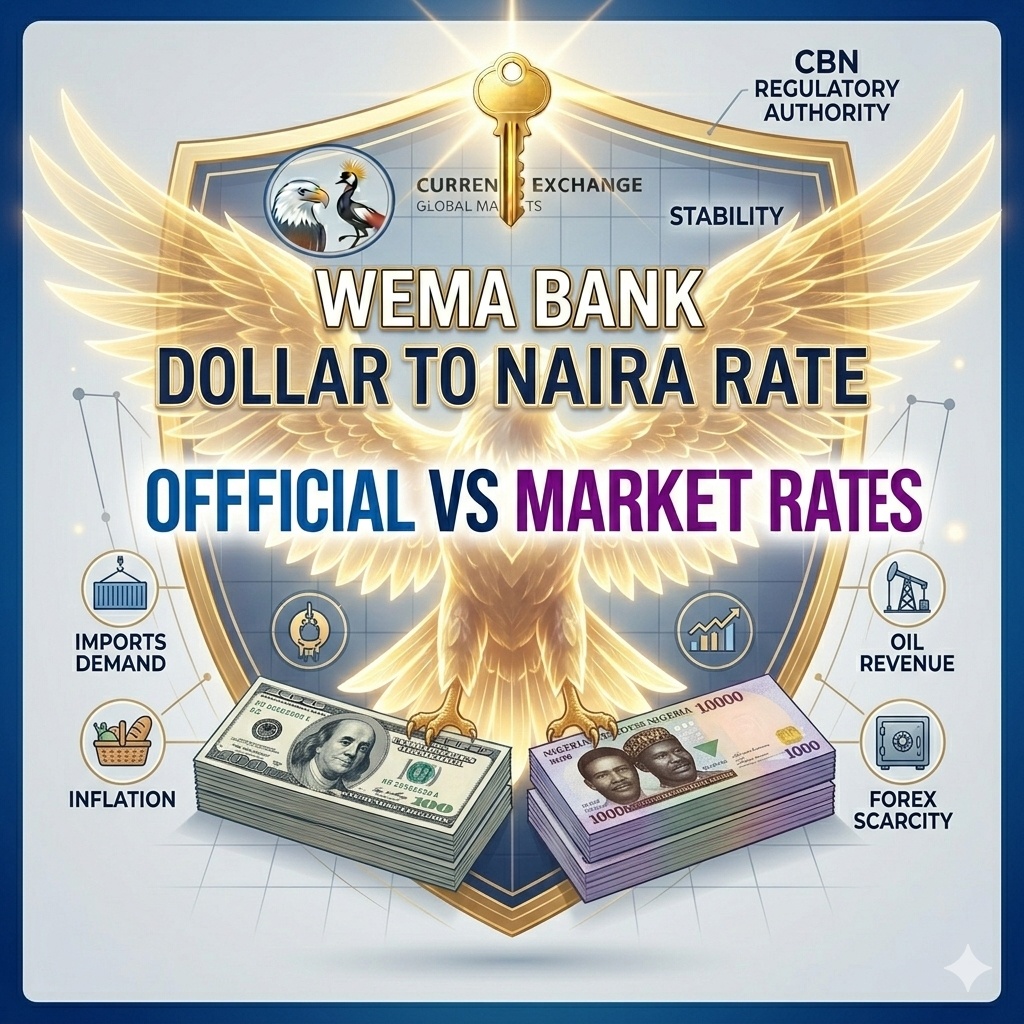
1. Import Dependency
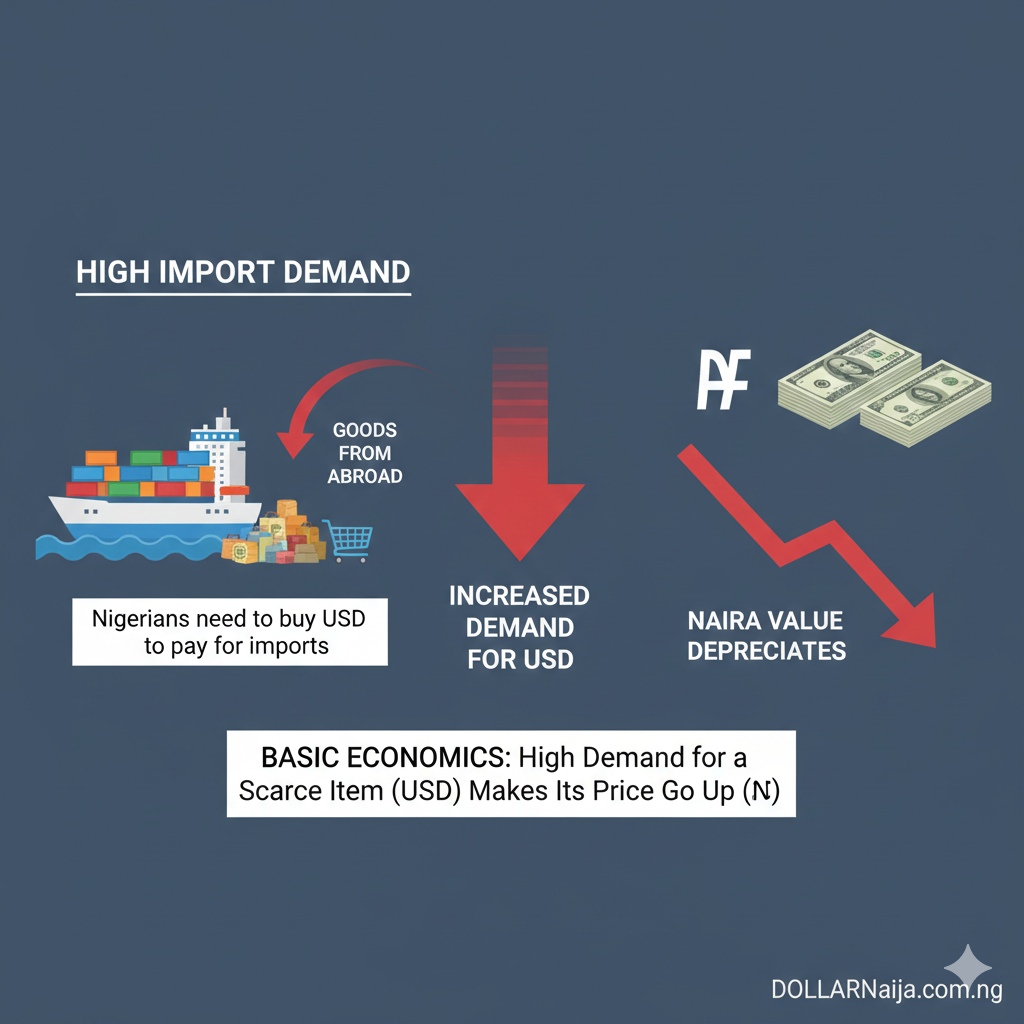
Nigeria relies heavily on imported goods, ranging from refined petroleum products to electronics and food items. Because these goods must be paid for in Dollars, there is a constant, high demand for USD. When demand outweighs the available supply, the price of the Dollar rises.
2. Oil Revenue Fluctuations
As an oil-exporting nation, a significant portion of Nigeria’s foreign exchange earnings comes from crude oil sales. When global oil prices drop or domestic production decreases, the country earns fewer Dollars. A reduction in the supply of Dollars leads to a scarcity that pushes the exchange rate upward.
3. Inflation Rates
Inflation reduces the purchasing power of a currency. When the inflation rate in Nigeria is significantly higher than that of the United States, the Naira tends to depreciate against the Dollar over time.
4. Monetary Policy and Interest Rates
Decisions made by the CBN regarding interest rates and money supply also play a role. Higher interest rates can sometimes attract foreign investment, increasing the supply of Dollars, whereas lower rates might have the opposite effect.

How Exchange Rates Affect Daily Life in Nigeria
The exchange rate is not just a number on a screen; it has a direct impact on the cost of living for every Nigerian.
- Food Prices: Even locally produced food can be affected if the fertilizers, machinery, or transportation fuels involved in their production are imported or influenced by global prices.
- Fuel and Energy: Since Nigeria imports a substantial amount of its refined petrol, the landing cost is tied to the USD/NGN rate.
- Education and Travel: For families with children studying abroad, a slight increase in the Sendwave dollar rate today can mean a significant increase in the amount of Naira required to cover tuition.
- Online Subscriptions: Services like Netflix, Spotify, or cloud storage are often billed in Dollars or pegged to the current exchange rate, affecting monthly entertainment budgets.
Common Myths About Dollar to Naira Exchange
In Nigeria, the foreign exchange (FX) market is often a subject of intense rumors. These misconceptions can lead to unnecessary panic or poor financial choices. Below, we break down the reality behind the most common myths.
Myth 1: “A High Exchange Rate Means the Economy is Failing”
The Reality: While a weak Naira makes imports expensive, a currency’s “nominal” value (the number on the screen) is not the only indicator of economic health.
- The Nuance: Many strong global economies have high exchange rate numbers. For example, the Japanese Yen often trades at over 100 JPY to 1 USD, yet Japan remains one of the world’s most advanced economies.
- The Nigerian Context: The real issue is volatility and purchasing power. If the economy transitions toward more local production and non-oil exports, a competitive exchange rate can actually make Nigerian goods cheaper for the world to buy, potentially boosting the manufacturing sector.
Myth 2: “The Dollar Will ‘Crash’ Back to Old Rates Suddenly”
The Reality: Many people hold onto the hope that the Dollar will suddenly drop from current levels back to historical rates (like ₦200 or ₦400).
- The Nuance: Currency value is tied to supply and demand. For the Dollar to “crash” in price, Nigeria would need a massive, sustained increase in USD inflows (like a sudden oil boom) or a drastic reduction in the demand for imports.
- The Nigerian Context: Economic adjustments usually happen gradually through policy reforms, improved reserves, and increased productivity. Expecting a sudden “crash” without structural economic changes is a misunderstanding of how global markets function.
Myth 3: “The Black Market Rate is the ‘Real’ Value of the Naira”
The Reality: The parallel market (black market) is often used as a benchmark by individuals, but it does not represent the full economic picture.
- The Nuance: The parallel market is a “retail” market driven heavily by speculation and immediate scarcity. It often carries a “premium” because it is unregulated and operates with higher risk.
- The Nigerian Context: The Official NAFEM rate (Nigerian Autonomous Foreign Exchange Market) is where large-scale, institutional transactions happen. The “real” value is actually a spectrum between these windows, and as the Central Bank works toward “rate unification,” the gap between them typically narrows.
Myth 4: “Nigeria Has a Dollar Shortage Problem”
The Reality: Economists often argue that Nigeria doesn’t just have a shortage of Dollars, but a mismatch and a liquidity problem.
- The Nuance: Even when Nigeria’s foreign reserves are healthy, the Dollars might be “trapped” in oil-backed loans or debt servicing, making them unavailable for the average importer.
- The Nigerian Context: There is often enough USD coming in, but it is not circulating efficiently through the banks to reach small business owners. This is why you might see the Sendwave dollar rate today fluctuate even when official reserves are reportedly high.
Myth 5: “Banning Imports Will Automatically Save the Naira”
The Reality: It is a common belief that if Nigeria stops importing everything from “toothpicks to rice,” the Naira will become strong overnight.
- The Nuance: Modern economies are interconnected. To produce goods locally, Nigerian factories often need to import machinery, spare parts, and raw materials—all of which require Dollars.
- The Nigerian Context: Total “import substitution” is difficult. A healthy economy isn’t one that imports nothing, but one that exports enough to comfortably pay for its imports. The focus is shifting from “stopping imports” to “increasing exports.”
Myth 6: “Rates Are the Same on Every App and Platform”
The Reality: Many users assume there is one “universal” rate for the day.
- The Nuance: Every platform—whether it’s a commercial bank, a digital transfer service like Sendwave, or a fintech app—has its own liquidity source and fee structure.
- The Nigerian Context: This is why the Sendwave dollar rate today might be different from what you see on a news site or at a physical bank. Each platform calculates its rate based on its operational costs and the speed of delivery it provides.
How to Check Dollar to Naira Rates Safely
To stay informed without falling victim to misinformation, follow these guidelines:
- Check Official Bank Portals: Most Nigerian commercial banks display their current FX rates for various transactions on their websites or mobile apps.
- Use Reputable News Outlets: Financial news platforms often report on the daily closing rates of the Nigerian Autonomous Foreign Exchange Market (NAFEM).
- Monitor Transfer Apps: For those receiving money, checking the rate directly within apps like Sendwave provides the most accurate “retail” rate for that specific service.
- Avoid Unverified Social Media Rumors: Telegram groups or unverified Twitter accounts often spread speculative rates that may not reflect reality.
Frequently Asked Questions (FAQ)
1. What is the official dollar to naira rate today?
As of February 2026, the official exchange rate in the Nigerian Foreign Exchange Market (NFEM) is determined by a “willing buyer, willing seller” model. Recently, the rate has shown signs of stabilization, hovering around ₦1,350 to ₦1,360 per dollar in the official window. However, these figures can fluctuate throughout the trading day based on market liquidity.
2. Why is the Sendwave dollar rate today different from the CBN rate?
The Sendwave dollar rate today is a retail rate specifically for international money transfers. Unlike the official CBN benchmark, Sendwave and other transfer apps must account for immediate liquidity availability and operational costs. While their rates often track the market closely, they may include a small margin to ensure the speed and reliability of the transfer.
3. Why has the naira strengthened recently in 2026?
Several factors have contributed to the Naira’s improved resilience this year:
- Reduced Import Demand: The Dangote Refinery has significantly lowered the need for foreign exchange to import refined petroleum products.
- Policy Reforms: The Central Bank of Nigeria’s (CBN) tight monetary policy and the use of the Electronic Foreign Exchange Matching System (EFEMS) have improved market transparency.
- Increased Reserves: Improved oil production and higher non-oil export receipts have bolstered Nigeria’s foreign reserves.
4. Is the black market exchange legal?
The CBN strictly regulates currency exchange and encourages all citizens to use Authorized Dealers, such as commercial banks and licensed Bureau De Change (BDC) operators. Engaging in “street” or “black market” trading is discouraged because it lacks consumer protection, fuels speculation, and can involve the risk of receiving counterfeit currency or facing legal scrutiny.
5. Does the dollar rate change daily?
Yes. Since Nigeria moved toward a unified, market-driven exchange rate system, the rate fluctuates every business day. On a typical day, the rate may change multiple times between the market opening at 9:00 AM and closing in the evening, depending on the volume of trade and demand for USD.
6. Where can I find the most trusted exchange rates?
For the most reliable information, you should consult:
- The official Central Bank of Nigeria (CBN) website.
- The FMDQ Exchange portal (for official NAFEM closing rates).
- Your local commercial bank’s mobile app or official website.
- Verified financial education platforms like dollarnaija.com.ng.
7. How does the exchange rate affect the price of petrol in Nigeria?
Even with local refining, the “landing cost” of fuel is influenced by global oil prices, which are denominated in Dollars. If the Naira strengthens against the Dollar, it reduces the pressure on fuel prices. Conversely, if the Sendwave dollar rate today or official rates rise, the cost of distribution and additives can increase, affecting the price at the pump.
Conclusion
Navigating the complexities of the Nigerian foreign exchange market requires more than just checking the Sendwave dollar rate today. It demands a fundamental understanding of how global economic trends, domestic policies, and supply-demand dynamics intersect to determine the value of the Naira.
As we have explored, the exchange rate is not a static figure but a reflecting mirror of the nation’s economic activities—from our dependency on imports and oil revenue to the strategic interventions of the Central Bank of Nigeria. While myths and speculations often cloud public perception, the reality is rooted in measurable economic factors. Whether you are managing personal remittances, paying international tuition, or running a business, staying informed through verified channels is the best way to mitigate risks and plan effectively.
The goal of financial awareness is not to predict the future, but to prepare for it. By understanding the difference between official and market rates and recognizing the factors that drive currency value, Nigerians can make more informed decisions in an ever-evolving financial landscape.
Final Thoughts on Financial Awareness
Managing your finances in a fluctuating economy starts with education. Always prioritize transparency by using licensed financial institutions and reputable digital platforms for your transactions. Knowledge of the market is your most valuable asset in protecting your purchasing power and achieving long-term financial stability.