
Introduction
Understanding the dynamics of the Nigerian economy requires a clear grasp of how currency valuation works. For many Nigerians, the search for the Bybit P2P dollar rate today or the official Central Bank of Nigeria (CBN) rate is a daily routine. This interest isn’t just about curiosity; it is driven by the practical realities of inflation, the cost of imported goods, international education expenses, and travel requirements.
As of early 2026, the Nigerian foreign exchange landscape continues to evolve under various monetary policy reforms. Whether you are a business owner looking to restock inventory from abroad or a student paying tuition in a foreign currency, knowing how these rates are determined is essential for financial awareness. This article provides a comprehensive, educational overview of the exchange rate system in Nigeria, explaining the differences between official and market-reflective rates without providing financial advice or price predictions.
Table of Contents
What Is the Dollar to Naira Exchange Rate?
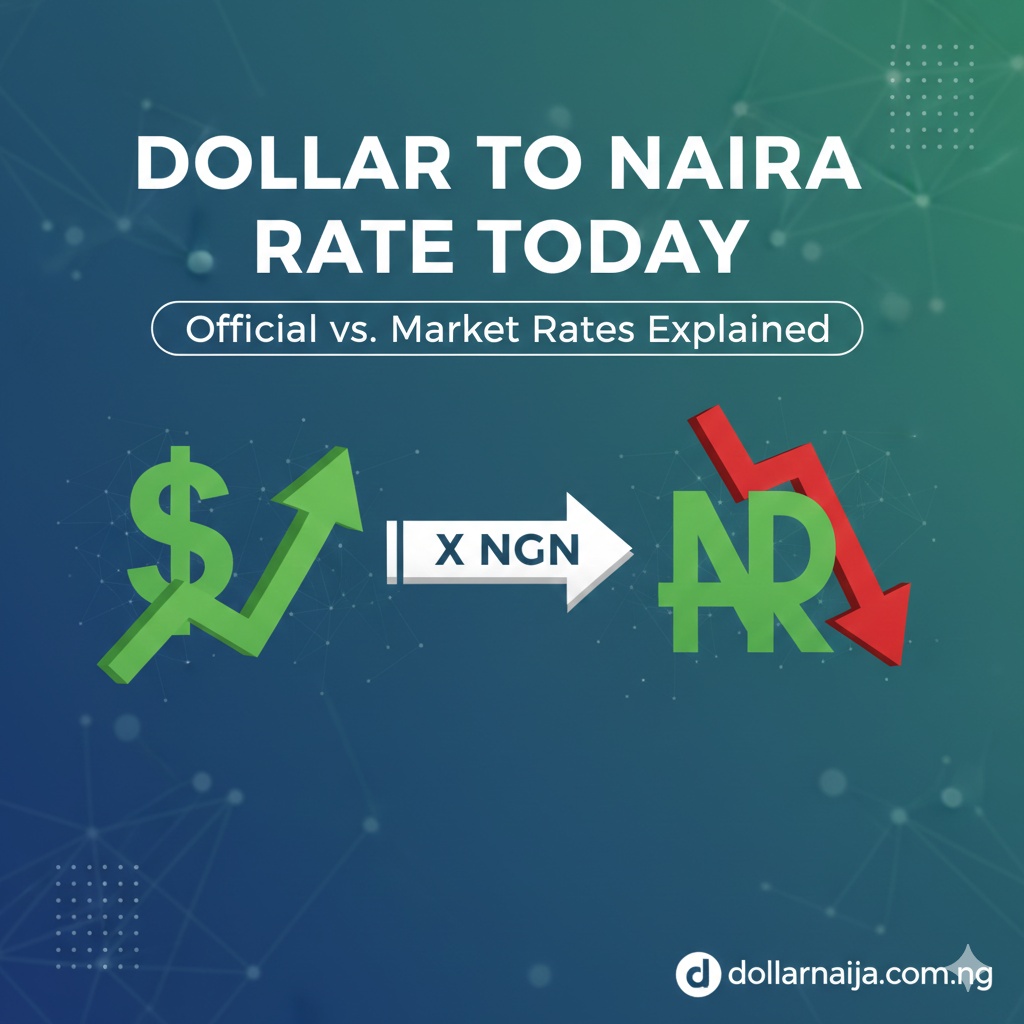
In simple terms, an exchange rate is the “price” of one currency in relation to another. When we talk about the Dollar to Naira (USD/NGN) rate, we are looking at how many Nigerian Naira units are needed to purchase one United States Dollar.
- USD (United States Dollar): The global reserve currency used for most international trade.
- NGN (Nigerian Naira): The legal tender and official currency of the Federal Republic of Nigeria.
The rate is not a static number; it fluctuates based on global and local economic activities. In a balanced market, when more people want to buy Dollars than there are Dollars available, the price of the Dollar goes up. Conversely, if there is an abundance of Dollars and low demand, the price may soften.
Official Dollar to Naira Rate in Nigeria
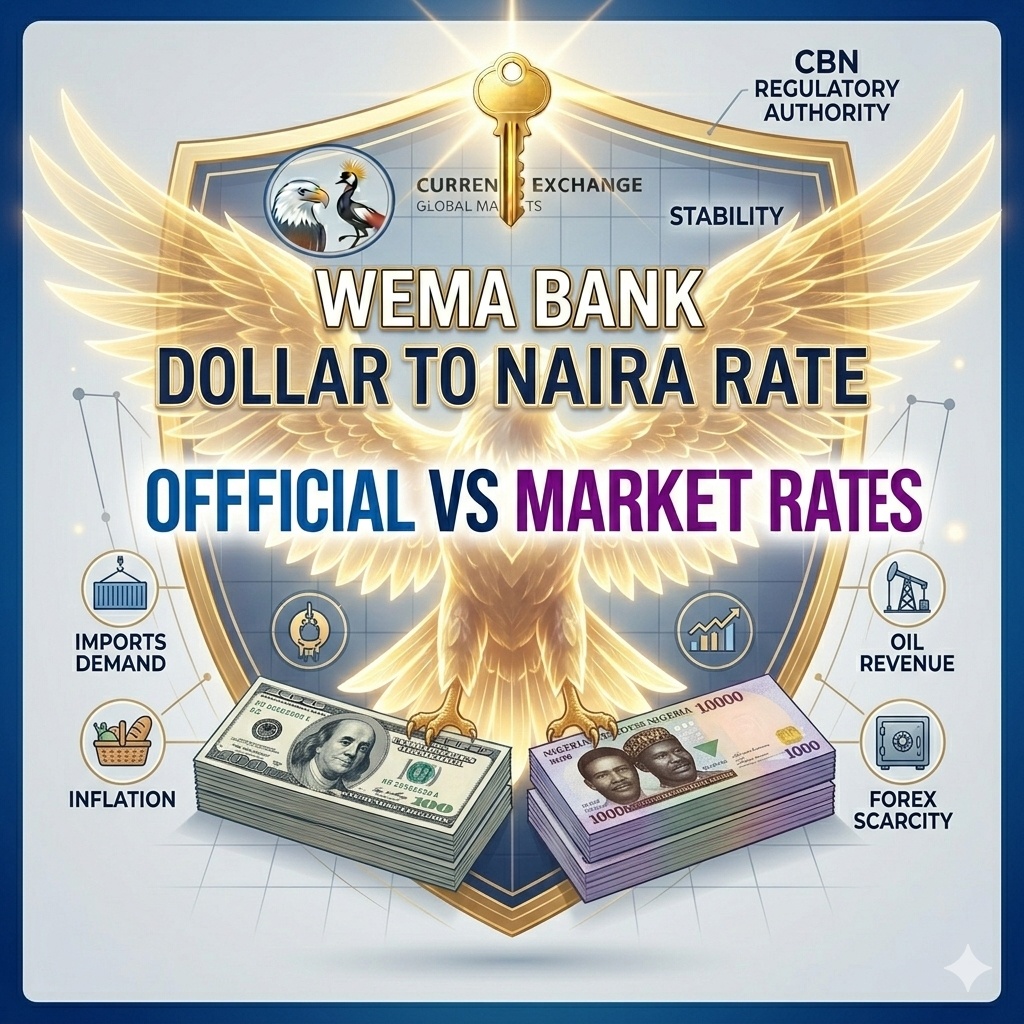
The “official rate” refers to the exchange rate recognized by the Central Bank of Nigeria (CBN). This rate is typically used for government transactions, diplomatic services, and specific windows available to commercial banks.
The Role of the Central Bank of Nigeria (CBN)
The CBN acts as the regulator of the Nigerian financial system. Its primary goal regarding the exchange rate is to maintain “macroeconomic stability.” By 2026, the CBN has moved toward a more market-driven approach through the Nigerian Foreign Exchange Market (NFEM), where the rate is determined by “willing buyers and willing sellers” rather than being strictly pegged by the government.
Official rates exist to provide a transparent benchmark for legitimate international trade and to help the government manage the country’s external reserves.
Parallel / Market Rates Explained
In addition to the official window, there is the “parallel market,” often referred to in local parlance as the black market. This is an informal sector where individuals and small businesses trade currency outside the direct oversight of the CBN.
Why Do Parallel Rates Exist?
The parallel market usually exists because the demand for Dollars often exceeds the supply available through official banking channels. Because the parallel market operates on immediate supply and demand without the documentation requirements of formal banks, the rates here are typically higher than the official NFEM rate.
Legal Awareness: It is important to note that the Nigerian government encourages the use of official channels for all foreign exchange transactions to ensure transparency and comply with anti-money laundering regulations.
The Role of Bybit P2P in Currency Observation
In the digital age, many Nigerians monitor the Bybit P2P dollar rate today as a secondary indicator of market sentiment. P2P (Peer-to-Peer) platforms allow individuals to trade digital assets like USDT (a stablecoin pegged 1:1 to the US Dollar) for Naira.
Because these platforms operate 24/7 and reflect real-time transactions between thousands of individuals, they have become a common reference point for the “real-time” value of the Naira. However, it is vital to remember that P2P rates are specific to digital asset markets and may include service fees or liquidity premiums that differ from physical cash or bank-transfer rates.
Why the Dollar Is Expensive in Nigeria
Several economic factors contribute to the high cost of the Dollar in Nigeria. Understanding these can help clarify why the Bybit P2P dollar rate today might fluctuate.
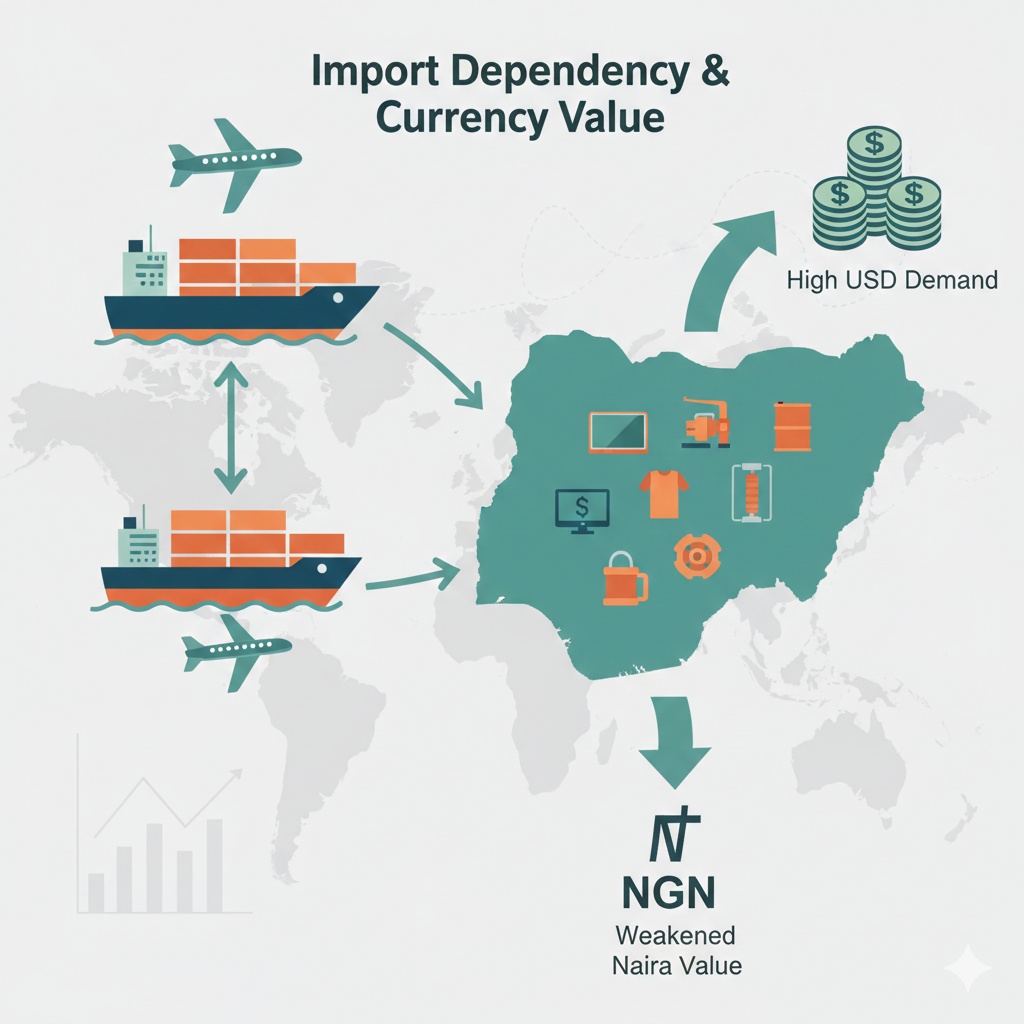
- Import Dependency: Nigeria imports a vast majority of its consumer goods, machinery, and even refined fuel. This creates a constant, high demand for Dollars.
- Oil Revenue Fluctuations: As an oil-dependent economy, Nigeria’s Dollar supply is heavily tied to global crude oil prices and domestic production levels.
- Inflation: High inflation in Nigeria reduces the purchasing power of the Naira. When the local currency loses value internally, it often loses value against foreign currencies as well.
- Demand and Supply Imbalance: When the number of people needing Dollars for travel, school fees, or trade exceeds the amount of Dollars entering the country through exports or foreign investment, the price naturally rises.
1. High Import Dependency and “Imported Inflation”
Nigeria relies heavily on foreign countries for essential items, including machinery, electronics, raw materials for industries, and even basic food items like wheat and dairy.
- The Demand Cycle: Because we buy so much from abroad, Nigerian businesses constantly need Dollars to pay their international suppliers. This high, non-stop demand for USD keeps the price high.+1
- Refined Petroleum: Historically, despite being a major crude oil producer, Nigeria imported nearly all its refined petrol (PMS). While the Dangote Refinery began reducing this burden in 2024 and 2025, the transition to full self-sufficiency is a multi-year process. Until we stop spending Dollars on fuel imports, the pressure on the Naira remains.
2. The Crude Oil Revenue Gap
Crude oil accounts for over 90% of Nigeria’s foreign exchange earnings. When oil production drops due to pipeline vandalism or technical issues—or when global oil prices fall—the country receives fewer Dollars.
- Reduced “Firepower”: With fewer Dollars coming in, the Central Bank of Nigeria (CBN) has less “firepower” to supply the market. In 2026, while oil production has shown signs of recovery toward 1.7 million barrels per day (mbpd), global price volatility still poses a risk to how many Dollars the government can provide to stabilize the market.
3. Monetary Policy and the “Real Yield” Gap
Investors often move their money to countries where they can get the best return. If inflation in Nigeria is 20% but a bank savings account only pays 15%, the money is effectively losing value.
- Attracting Foreign Investment: To combat this, the CBN often keeps interest rates high (the Monetary Policy Rate was held at 27% through much of late 2025 and early 2026). High rates are designed to attract foreign investors to keep their money in Naira-denominated assets. If these investors feel the “real return” isn’t high enough compared to the US Dollar, they withdraw their funds, leading to a “capital flight” that makes the Dollar more expensive.+1
4. Speculation and Market Sentiment
Currency value is also driven by trust. If people believe the Naira will be weaker next month, they will buy Dollars now to protect their savings.
- The P2P Influence: This is where the Bybit P2P dollar rate today becomes significant. Because P2P markets are fast-moving and accessible, they often react first to rumors or policy changes. When thousands of people “hedge” (convert Naira to USD or USDT) at once, it creates a self-fulfilling prophecy where the Naira drops simply because everyone expected it to.
5. Foreign Exchange Backlogs
For several years, Nigeria faced a “backlog”—unmet demands for Dollars by foreign airlines, manufacturers, and investors who wanted to take their profits home.
- Clearing the Debt: Although the CBN made massive strides in 2025 to clear these debts using Eurobond proceeds and increased reserves, the memory of these shortages makes the market cautious. Investors are more likely to demand higher rates (more Naira for their Dollars) as a “risk premium” for doing business in an environment that has seen such volatility.
How Exchange Rates Affect Daily Life
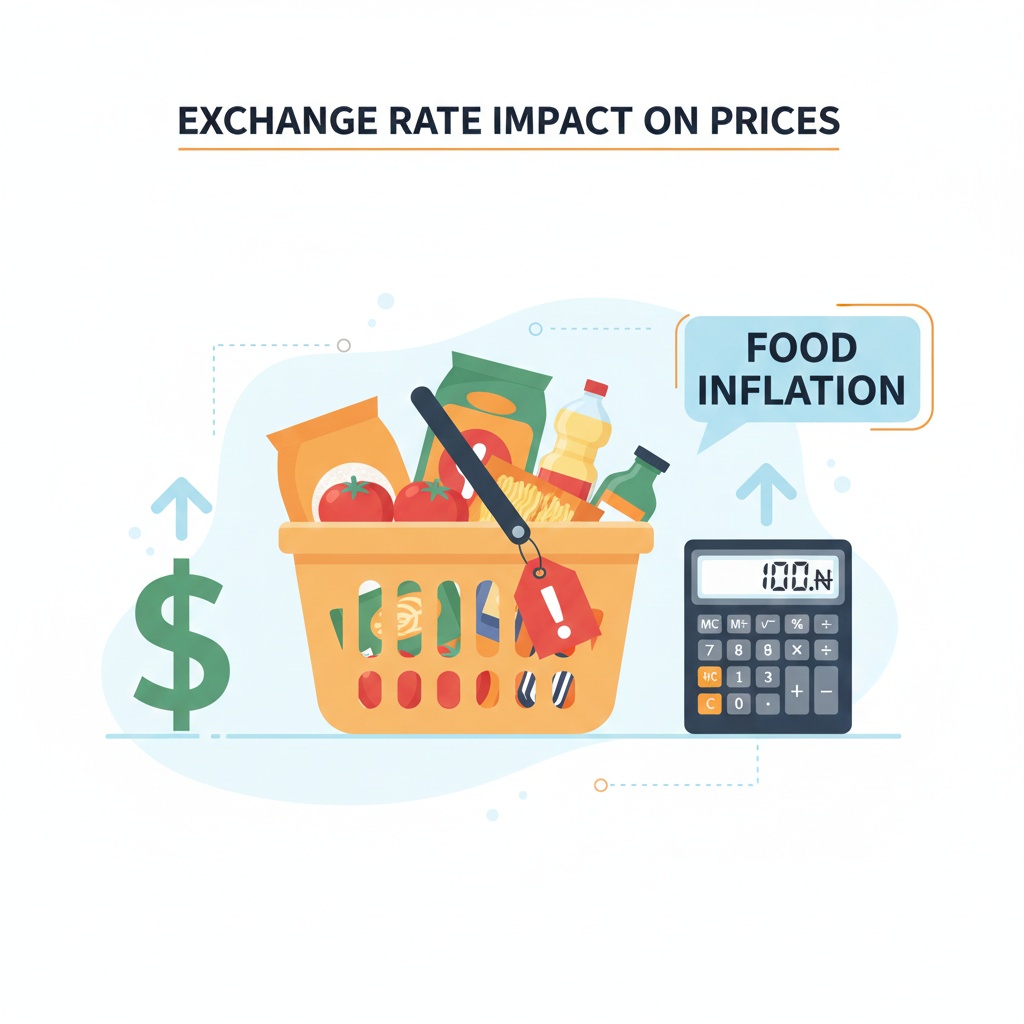
The exchange rate is not just a number on a screen; it has a direct impact on the cost of living for every Nigerian household.
- Food Prices: Many agricultural inputs (like fertilizers) and processed foods are imported. A higher Dollar rate leads to “imported inflation.”
- Transportation and Fuel: Even with local refining efforts, the global pricing of petroleum products is dollar-denominated, influencing transport costs.
- Education: Families with children studying abroad face higher tuition costs in Naira terms when the exchange rate increases.
- Digital Services: Subscriptions for streaming services, cloud storage, and online advertisements are usually billed in Dollars, making them more expensive as the Naira weakens.
1. The “Kitchen Table” Inflation
For the average Nigerian family, the most visible impact is at the dining table. Nigeria remains a significant importer of processed foods and agricultural inputs.
- Imported Staples: Even when you buy locally processed rice, the machinery used to mill it, the bags used to package it, and the trucks used to transport it often rely on dollar-denominated spare parts and fuel.
- The Cooking Oil Paradox: While harvest seasons for grains like maize and beans can bring temporary relief, processed items like vegetable oils and margarine often see prices rise regardless of the season if the Dollar is expensive. This is because the chemicals and packaging materials are frequently imported.
2. Transportation and the “Logistics Tax”
In 2026, the removal of fuel subsidies has linked the price of petrol (PMS) and diesel (AGO) directly to the global price of crude and the current exchange rate.
- The Landing Cost: When the Naira weakens, the cost of bringing refined fuel into Nigerian ports rises. This immediately translates to higher fares for Danfo buses, ride-hailing services, and interstate travel.
- Supply Chain Ripple: Because almost everything in Nigeria moves by road, higher transport costs act as a “hidden tax” on every item. A basket of tomatoes becomes more expensive in Lagos not because the farmer charged more, but because the cost of trucking them from the North increased due to diesel prices.
3. Education and Future Planning
Education is a high priority for Nigerian families, but it is also one of the sectors most vulnerable to exchange rate shocks.
- Foreign Tuition: For families with students in the UK, USA, or Canada, a 10% drop in the Naira’s value means an immediate and massive increase in the amount of Naira needed to cover a single semester.
- Local Private Schools: Even domestic private schools often peg their fees to the Dollar or increase them to cover the rising cost of imported educational materials, laboratory equipment, and international curriculum licenses.
4. Small Business Survival (SMEs)
Nigeria’s economy is powered by Small and Medium Enterprises (SMEs). For a shop owner in Computer Village or a tailor in Aba, the exchange rate is a daily hurdle.
- Inventory Costs: A phone seller who stocks devices today might find that the cost to restock the same inventory has risen by 15% next month. This leads to “replacement cost pricing,” where sellers increase prices immediately after a Naira dip to ensure they can afford to buy new stock.
- The Margin Squeeze: When prices rise too fast, consumers stop buying. Small businesses often face a “squeeze” where they cannot pass the full cost of the Dollar onto their customers without losing them entirely, leading to lower profits and business closures.
5. Digital and Subscription Services
In the modern Nigerian economy, many daily tools are “invisible” imports.
- Online Tools: From Netflix and Spotify subscriptions to the Zoom calls used by remote workers and the Facebook/Google ads used by small businesses to find customers—these are almost all billed in Dollars.
- The Naira Card Limit: High exchange rate volatility often leads banks to lower the monthly spending limits on Naira debit cards for international transactions, making it harder for freelancers and tech-savvy youths to access global digital tools.
Summary Table: Exchange Rate Impact at a Glance
| Sector | Impact of High USD Rate | Result for Citizens |
| Food | Higher cost of fertilizers & packaging | Increased “Market Money” budget |
| Energy | Rising landing cost of fuel/gas | Higher transport & generator costs |
| Health | Imported drugs and medical gear | Increased cost of prescriptions |
| Tech | Higher price for gadgets & data | Digital divide/High cost of connectivity |
Common Myths About Dollar to Naira Exchange
In Nigeria’s fast-paced financial environment, misinformation can spread as quickly as a market dip. To maintain true financial awareness, it is essential to separate economic facts from “street” rumors. When you see a sudden spike in the Bybit P2P dollar rate today, it is often accompanied by these common myths.
Myth 1: “The Exchange Rate Is Fixed by the Government”
Many people believe that the President or the CBN Governor simply picks a number and decides that the Naira will be 1,400 or 1,500 to the Dollar.
- The Reality: As of 2026, Nigeria operates a managed float system. This means the rate is primarily determined by “willing buyers and willing sellers” in the Nigerian Foreign Exchange Market (NFEM). While the CBN intervenes to prevent extreme volatility, they do not “fix” the price in a vacuum. The rate is a reflection of how many Dollars are actually available versus how many people want to buy them.+2
Myth 2: “The Dollar Will Crash if We Stop Using it Locally”
There is a popular belief that if Nigerians stop quoting prices in Dollars or using it for local transactions, the Naira will magically gain massive value.
- The Reality: While “dollarization” (using USD for local rent or services) is illegal and does put pressure on the Naira, it is not the primary cause of a weak currency. The Naira’s value is driven by international trade. As long as Nigeria imports fuel, machinery, and food that must be paid for in Dollars, the demand for USD will remain high regardless of how we handle local transactions.
Myth 3: “The Parallel (Black) Market Rate Is the ‘Real’ Rate”
Because the parallel market is easily accessible, many assume its rate is the only one that matters.
- The Reality: The parallel market is a retail sentiment market. It reflects the desperation or urgency of small-scale buyers. However, the “real” economic rate that affects the price of your petrol, your bank’s ability to lend, and the country’s GDP is the Official NFEM rate. Large-scale manufacturers and the government do not use the black market; they operate through the official window, which is the true backbone of the economy.
Myth 4: “Bybit P2P Rates Are Manipulated by Speculators”
When the Bybit P2P dollar rate today climbs higher than other sources, some claim it is a “scam” or a deliberate manipulation by crypto traders.
- The Reality: P2P platforms are decentralized marketplaces. The price is the average of thousands of individual trades happening every minute. If the rate is high, it is usually because sellers are pricing in the “risk” of Naira volatility or because there is an immediate shortage of USDT (digital dollars). It isn’t manipulation; it’s a high-speed reflection of supply and demand.
Myth 5: “A Weaker Naira Only Affects the Rich”
There is a dangerous myth that if you don’t travel abroad or buy Dollars, the exchange rate doesn’t affect you.
- The Reality: As we explored in the “Daily Life” section, a weak Naira causes cost-push inflation. When the Dollar is expensive, the cost of the diesel used to transport tomatoes from the farm to your local market increases. Therefore, even the woman selling peppers in a rural village is affected by the exchange rate because her cost of living—and the cost of the goods she buys for her family—has gone up.
Myth 6: “The Rate Is the Same at All Banks”
Many assume that once the CBN announces a closing rate, every bank must offer that exact price.
- The Reality: Banks are Authorized Dealers, and within the “willing buyer, willing seller” framework, different banks may have slightly different rates based on their own liquidity (how many Dollars they actually have in their vaults). While they stay close to the NFEM average, it pays to check with your specific financial institution for their current “Ask” and “Bid” prices.
How to Check Dollar to Naira Rates Safely
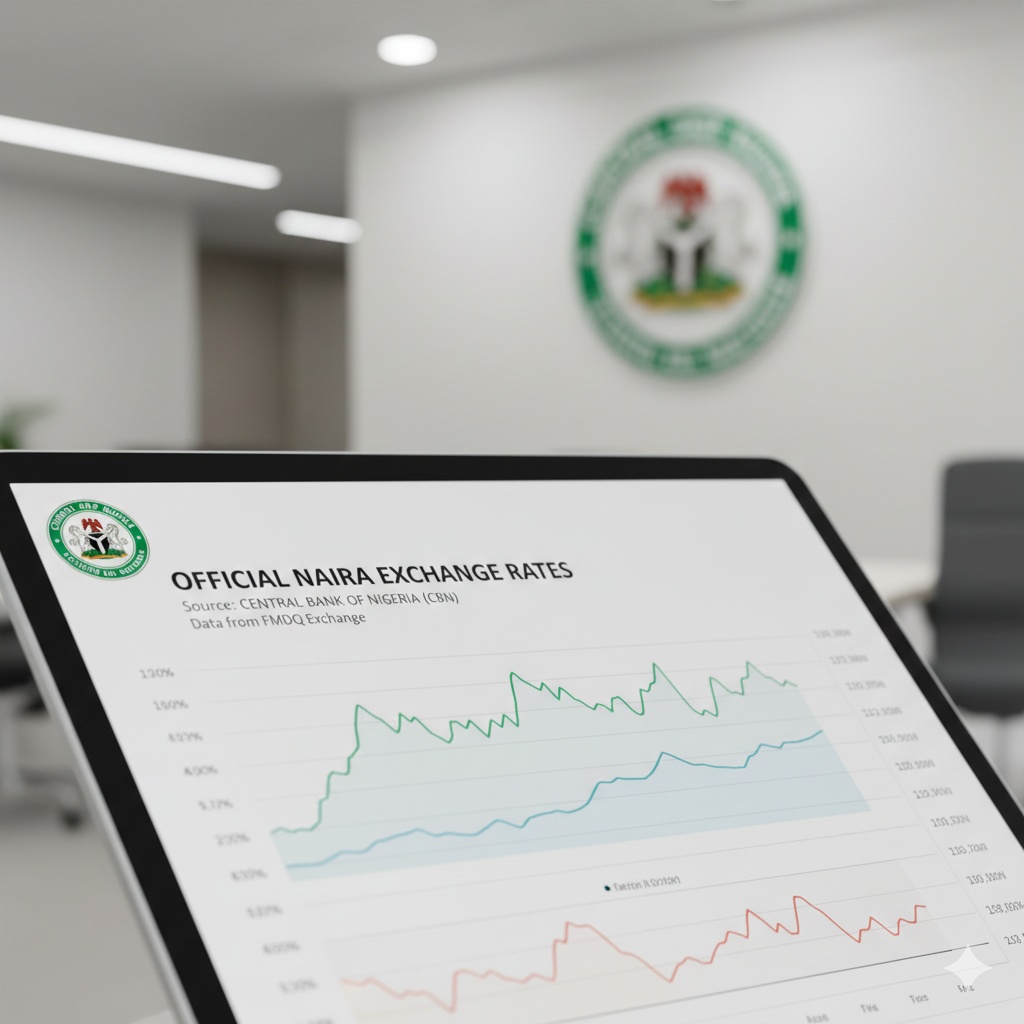
When looking for the most accurate information, prioritize verified and official sources:
- Commercial Banks: Most Nigerian banks now display the daily NFEM exchange rate on their websites or in-branch.
- Central Bank of Nigeria (CBN) Website: The ultimate source for official data and policy updates.
- Reputable Financial News Outlets: Organizations that report data from the FMDQ Exchange or the National Bureau of Statistics (NBS).
- Official Digital Platforms: If checking the Bybit P2P dollar rate today, ensure you are looking at the official platform interface to avoid misinformation from third-party social media posts.
The Bybit P2P Dollar Rate: A Modern Indicator for Nigerians
In recent years, the Bybit P2P dollar rate today has become one of the most frequently searched terms by Nigerians interested in the real-time value of their currency. While traditional bank rates are updated once or twice a day, P2P (Peer-to-Peer) platforms provide a 24-hour live feed of what people are actually willing to pay for “Digital Dollars” (USDT).
1. What Is Bybit P2P?
Bybit is a global cryptocurrency exchange that includes a P2P marketplace. In this marketplace, Nigerians can buy and sell USDT (a stablecoin pegged to the US Dollar) directly with each other.+1
- The “Escrow” System: When you start a trade, Bybit holds the seller’s USDT in a digital safe (escrow). The coins are only released to the buyer after the buyer has sent Naira to the seller’s bank account and the seller confirms receipt. This makes the process secure for both parties.+1
2. Why Is the P2P Rate Often Higher Than the Bank Rate?
If you compare the Bybit P2P dollar rate today with the official bank rate, you will notice a gap. There are three main reasons for this:
- Immediate Liquidity: Banks often have long waiting lists for Dollars. On P2P platforms, you can get the equivalent of Dollars in minutes. You are essentially paying a “convenience fee” for speed.
- Global Demand for USDT: Because USDT is used for international payments, crypto trading, and as a hedge against inflation, its demand is incredibly high. When demand outstrips the number of people willing to sell their USDT for Naira, the price goes up.
- No Documentation Barriers: Unlike bank transactions that require Form M or Form A and various proofs of purpose, P2P trading is open to anyone with a verified account. This ease of access attracts a wider pool of buyers, pushing the market price to a more “pure” supply-and-demand level.
3. Using P2P as an Economic Weather Vane
For many financial experts in Nigeria, the P2P rate serves as a “leading indicator.”
- Predicting Trends: If the P2P rate starts climbing rapidly on a Sunday evening, it often signals that the official market will face high demand when it opens on Monday morning.
- Market Sentiment: It shows how much confidence Nigerians have in the Naira at any given moment. During periods of economic uncertainty, the P2P rate tends to spike as people move their savings into USDT to protect their purchasing power.
4. Safety Tips for Checking and Using P2P
While Bybit P2P is a highly secure platform, users should always exercise caution to avoid misinformation or scams:
- Verify the Merchant: Always look for “Verified Merchants” (usually marked with a checkmark) who have a high completion rate (95% or above).
- Don’t Trust Screenshots: If someone sends you a screenshot of a “cheap” rate on social media, verify it yourself on the official Bybit app. Scammers often use fake screenshots to lure people into “too-good-to-be-true” deals outside the platform.
- Stay on the Platform: Never complete a transaction or send money based on a chat outside the official Bybit interface. The escrow protection only works if the trade is active on the platform.
Disclaimer: This content is for educational and informational purposes only. Monitoring P2P rates can provide insights into market sentiment, but it should not be taken as financial or investment advice. Always use authorized financial institutions for official foreign exchange transactions.
FAQ Section
1. What is the official dollar to naira rate today?
The official rate is determined daily by the Nigerian Foreign Exchange Market (NFEM). You can find the most recent closing rate on the official website of the Central Bank of Nigeria (CBN).
2. Why is the Bybit P2P dollar rate different from the bank rate?
P2P rates reflect the immediate demand for digital stablecoins (like USDT) among individual traders. These rates often include a premium for instant liquidity and are not restricted by the same operating hours or documentation required by traditional banks.
3. Is it legal to buy dollars in the parallel market?
The Nigerian government and the CBN encourage all citizens and businesses to use the official “willing buyer, willing seller” windows provided by commercial banks and authorized dealers to ensure the legality and security of their funds.
4. Why does the naira fluctuate so often?
Fluctuations occur due to changes in oil prices, shifts in CBN monetary policy, global economic trends, and the level of foreign investment (portfolio inflows) entering Nigeria at any given time.
5. Where can I check the most trusted exchange rates?
For official transactions, check with your bank or the CBN. For educational purposes regarding market sentiment, verified financial news platforms and established P2P platforms like Bybit provide real-time data.
6. Does the exchange rate affect the price of locally produced goods?
Yes. Many local manufacturers rely on imported raw materials or machinery. Additionally, the cost of diesel and logistics is often influenced by global dollar-denominated prices, which can push up the cost of locally made products.
Conclusion
Navigating the world of foreign exchange in Nigeria requires patience and a commitment to staying informed through credible sources. While the Bybit P2P dollar rate today serves as a modern barometer for market demand, the official policies of the Central Bank of Nigeria remain the cornerstone of the country’s financial framework. By understanding the factors that drive these rates—from import dependency to global oil trends—Nigerians can better prepare for the economic realities of 2026.
This article is written to help readers understand currency exchange concepts in Nigeria. It is provided for informational purposes only and does not constitute financial, investment, or legal advice. Exchange rates are subject to change without notice.
For daily currency education and explanations, visit dollarnaija.com.ng.